
Chapter 10
1986 - Year of Big Change


CHAPTER 10 - Year of Big Change - 1986
Back to the coast . . . to stay (mostly)
(Jim) Previously I cryptically alluded to “the next huge shift in our life circumstances”. The shift emerged very soon after I concluded my doctoral work and received a PhD degree from Saybrook Institute. I had not foreseen the radical effect that achievement would have on my conviction of where I needed to be geographically in order to reap the most benefit professionally from my long-delayed achievement. So it came to me relatively suddenly and with surprising clarity: we needed to pull up our roots in northern New Mexico and make a new start in northern California.
The immediate groundwork for this revelation was laid by a conversation I had with Eleanor Criswell following the graduation ceremony in February, 1986. Dr. Criswell had been one of the esteemed founders of Saybrook (which had begun as the Humanistic Psychology Institute), and as such had attended the graduation ceremony in which I and several other candidates had received our diplomas. So she had heard about my research, and was impressed enough to refer me to a colleague of hers who had started a counseling co-op he called the Creative Health Center, and was open to taking on associates. So even before I had returned to New Mexico following my graduation I had a solid lead to a potential basis for beginning a new biofeedback practice–this time in Marin County, a much more populous and well-to-do region than the one we grew up in.
Returning home, diploma victoriously in hand, I eagerly told Molly about the Creative Health Center prospect. Our disenchantment about the growing militancy of Los Alamos culture, and the related deterioration of the physical environment (dramatically exemplified by increasing light pollution at night as security lighting spread in our direction across the vast “tech areas” occupied by the Lab), had been subliminally increasing for quite a while. And now, with the exciting new development of prospects in the Bay Area, our dissatisfaction with life on “The Hill” boiled over into conscious recognition. We were ready to return to California, to the Golden Gate–this time to stay for several years.
(Molly) Meanwhile, I learned of an opportunity to visit the USSR as part of a “Women For Peace” delegation, under the sponsorship of the Center for U.S.-USSR Initiatives. At that time, visiting the USSR seemed on a par with a trip to the moon. However, I felt a strong calling to go because of my increasing interest in peace work. So I applied and began to save up the necessary funds.
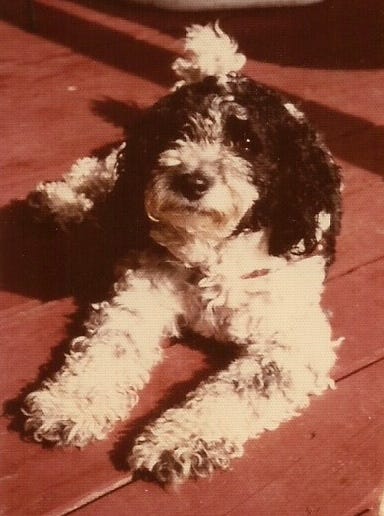
Chica
(Molly) Our little poodle-mix dog Chica was showing symptoms of disease, starting with very sore paws. Eventually, she was diagnosed with diabetes, which meant we had to test her urine daily and administer insulin shots. I had a difficult time collecting urine because Chica hated my trying to catch it and resisted peeing–except on the kitchen floor at night. Consequently, we could never determine the right dosage and Chica was clearly getting worse. I began to realize we might have to euthanize her, especially when we began planning a trip to California; I didn’t want to leave a sick and probably dying dog with my parents.
I finally asked her what she wanted me to do and received what I believed to be a psychic message from her, to this effect: “I’m ready to go but will stay as long as you need me.” So I made the painful decision to euthanize her, and asked the vet who made home visits to come do the deed. Jim was teaching a class in Santa Fe that day and had to leave before the vet came. So I was alone with my beloved Chica, holding her on my lap as she went peacefully to sleep, and then was gone. I buried her in the backyard grave my father had dug earlier in the day, crying long and hard. I experienced this as a heart-opening for me, allowing me to weep for many other losses–as if Chica was serving me even in her death. She had been with us for over 10 years.
Making of Peace Symposium
(Molly) I became increasingly interested in peace work, as my journals show. I felt a calling to do what I could to understand the psychology behind war-making and what I (and other peaceniks) saw as a nearly knee-jerk militaristic response to any conflict in the world, or any action on the part of another country that was perceived to be adverse to American (mostly economic) interests. I wanted to help create a peace psychology to transform the consciousness of Americans to value peace above a win/lose belligerent binary.
To this end, I joined with other peace activists in Santa Fe to put on a Making of Peace Symposium. We invited activist Patricia Ellsberg (wife of Daniel Ellsberg of the Pentagon Papers) to give a keynote address.
About ten days later, President Reagan ordered a major bombing of Libya, supposedly in retaliation for the terrorist bombing of La Belle, a West Berlin discotheque frequented by U.S. soldiers. I was very upset about the US attack on Libya, which killed and wounded many innocent civilians. That the bombing occurred just after the symposium underscored the urgency of peacework in our world. (And of course that urgency continues to this day in the face of ongoing and intensifying military action–and reaction–around the world, especially the genocide taking place in Gaza under Isreali occupation, with American-supplied bombs and military equipment.)
So I was more eager than ever to depart on my peace pilgrimage to the Soviet Union twelve days later. Maybe we American women could join with women in the USSR to diminish somewhat the enmity between our countries and take some baby steps toward peace.
Women for Peace Pilgrimage to the USSR and the Chernobyl Nuclear Disaster
(Molly) I flew to Helsinki by way of Seattle on April 27, 1986–one of the most adventurous trips of my life to date! I had a nightmare the night before I left that left me shaking with fear. In the dream, I lost track of Jim in a four story parking garage, screaming for him, with uncaring people passing by. I realized in flight that I was afraid I wouldn’t get back to Jim, to home, to Cass and Greg. This was an indication of how momentous this trip was. From the perspective of 2023, when it’s not such a big deal to travel to Russia, it’s hard to grasp that. (Although with the Russian war in Ukraine, it’s a bigger deal than before.)
Our group of women gathered in Helsinki for a night and a day of orientation and getting acquainted. It was exciting just being in Helsinki, and I was glad for the breather before going into the (drum roll) Soviet Union. I enjoyed getting to know the other women, from all over the United States, with a variety of ages and backgrounds, although nearly all appearing to be white and middle class (something I would not have made note of at the time).
By the morning following our arrival, elevated levels of radiation were being detected across northern Europe, including in Finland; authorities thought that a nuclear power plant in Chernobyl, Ukraine, then part of the USSR, might have exploded and/or melted down. (Eventually, the world found out the accident had occurred on April 26, before we women even began our journey to Helsinki.) Now we were faced with a very difficult decision: do we go ahead with our planned trip into a country likely under radioactive fallout, or not? Two women decided to return home, one being pregnant, the other with a heart condition. The rest of us chose to go ahead into Leningrad (aka St Petersburg), arriving on April 30. I wrote in my journal, “My choice is to connect my fate with the Russian people.”
We were given rooms in the elegant Hotel Polkovshaya; my roommate turned out to be Enid Scriebman, who was just then joining our group. Enid had been with another “citizen diplomacy” group in Kiev when the power plant blew up. I think she may have requested to be my roommate, although I don’t recall why. We became friends immediately and remained roommates for the rest of our time in Russia.
May Day was a very big holiday in the Soviet Union, celebrating workers worldwide. There was a major parade/demonstration that we watched for hours, standing in the rain. I was inspired by thousands of ordinary folks–families, young adults, a few middle-aged people, and a few “babushka”--all strolling along in a throng, smiling, talking, waving. The words came to me: “Not one of these must suffer at our hands.” Banners with Lenin’s image everywhere, on all the buildings and the KGB vehicle parked somewhat menacingly as I turned to walk back to the hotel to get warm.
Returning wet and chilled to the hotel, I reflected on my standing so long in a downpour that very likely contained radioactive fallout from Chernobyl.
We were all concerned about how to get the word home to our families that we were more or less safe and sound. International phone calls were nearly impossible to make and very costly. Our tour leaders assured us that their colleagues in the US would be notified and they would in turn get the word to our families. Unfortunately, that took a few days and meanwhile Jim was beleaguered with calls from friends and family asking about my safety–when he had no news to report.
Because it was clearly not safe to go into Ukraine as had been planned, we ended up staying in Leningrad for ten rather glorious days. Most of the other tourists had left, so we could easily get into the ballet, concerts, museums, etc. Attending the Bolshoi Ballet was indeed memorable.
We met with the Leningrad Women’s Committee, always under the watchful eye of our Intourist guide. We toured schools, with sweet song and dance performances by the children, and ubiquitous pictures of Lenin as a kindly grandfather figure. We visited museums, cathedrals, the Summer Garden, a public sauna, an artist’s studio, and several friends of our tour guides, sometimes in their home apartments.
We also visited the Piskaryovskoye Memorial Cemetery where 420,000 civilian victims of the Siege of Leningrad (1941-1944) and 50,000 soldiers of the Leningrad Front were buried in 186 mass graves, each marked only by the year. I stood at one mounded grave marked 1942, the year I was born, and contemplated the genocide that the citizens of Leningrad were enduring while my family lived in safety and comfort half a world away. It was a very moving and memorable experience
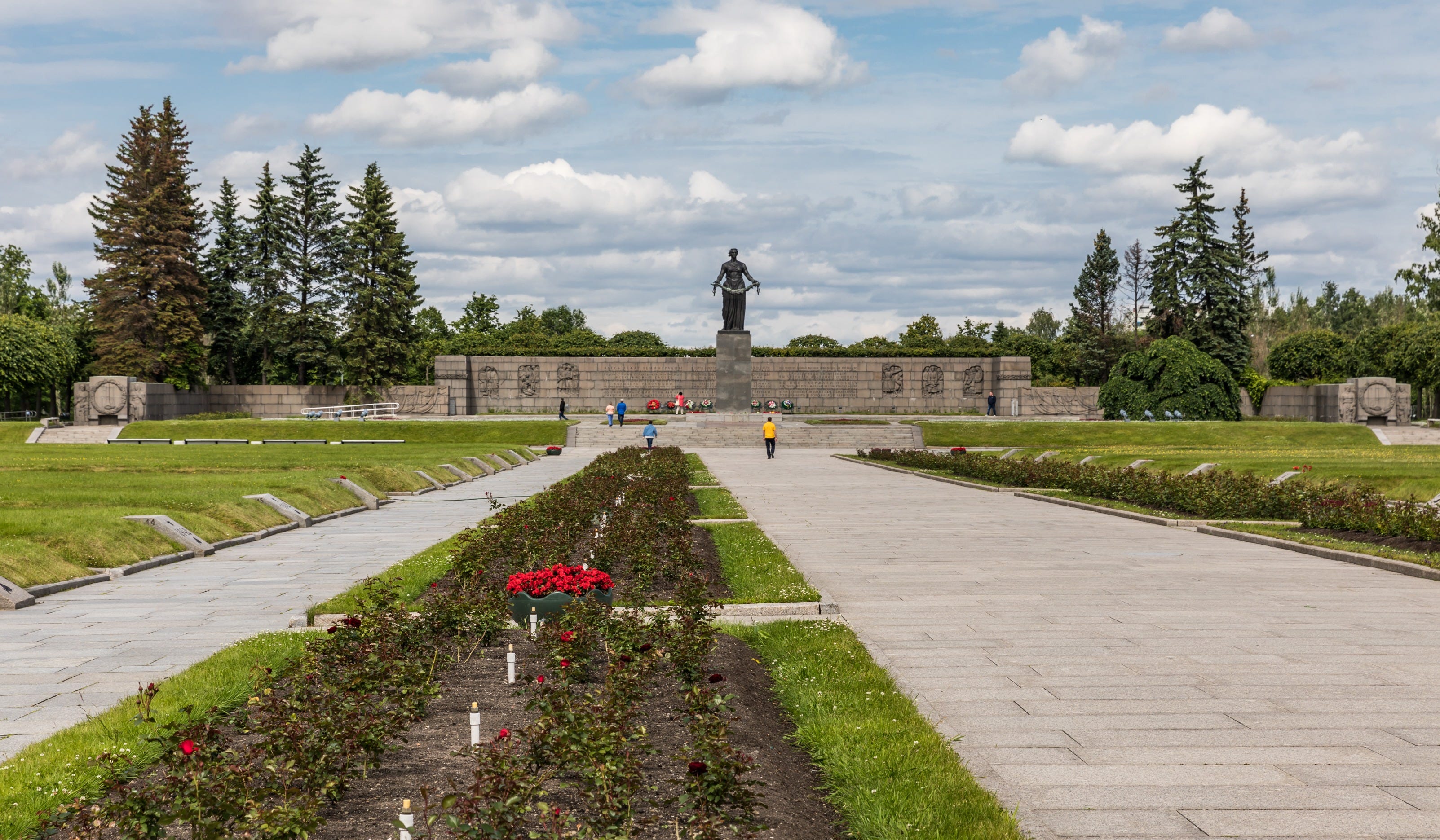
In years following, I was to visit Leningrad several times to teach psychosynthesis at the Harmony Cooperative–more on that later. After the fall of the Communist government in 1991, the city resumed its traditional name of St. Petersburg. To this day, I consider it to be the most beautiful city I’ve ever seen.
After our ten days there, we went on to Moscow, another adventure, still with few other tourists. I have vivid memories of the Kremlin, Red Square, Saint Basil's Cathedral, and Lenin's Mausoleum. We had numerous visits with official groups and private citizens. Notes in my journal remind me of one important insight shared by John Nicolopolis, one of the people who spoke to our group: the Russian or Soviet society was based on the collective, while the United States society emphasized (and still does) individuality. He believed this was the underlying cause of conflict between our countries, not Marxism or communism per se.
Back in Helsinki on our way home, we shared our deepest insights or highlights, and fortunately I took notes. Reading through them, common themes emerge: the friendliness and caring displayed to us Americans by nearly everyone we met; how beleaguered the Soviet people felt by the USA’s demonizing of them; and their very strong expressed desire for peace and an end to the nuclear arms race.
Notes from Molly’s journal:
It’s how I feel about the situation here: confusion and fear. I feel despairing about the Soviet police state even while I appreciate the beauty of the culture and the people. It’s amazing to me that they can coexist.
It’s hard to imagine how to make peace with a system of such lies, half truths, mendacity. Denial rules here. So how can there be trust?...
How to heal? Of course it’s through love. Love, love, love. Love, not enmity, not blame, not distancing. Love these people in their struggle…Trust the inner truth and wholeness that is trying to emerge. The Soviets must find their own way to truth, to trust, to freedom… Love is unconditional. Acceptance is the embracing of what is. Can I set aside for a while my judging, evaluating, figuring out mind, and just open my heart to it all?…
I come away with a perspective that is difficult: the USA and its allies have made the USSR into an enemy because of the capitalist dislike of communism. We are responsible primarily for the arms race and much of the present day repression-fear syndrome in the USSR.
I returned home from my journey with a new sense of relationship with the Russian people I had met. I came away with the image of the Russian and American people being twins separated at birth by warring parents; we needed to be reunited!
I also came away with greater determination than ever to somehow make a living through “peace work.” I thought of establishing some sort of non-profit organization, a “Center for Peacecraft.” I also planned to write a book about my experience in the USSR and peace psychology. Although neither dream ever manifested in those forms, those intentions continued to shape my work in years to come.
Other travels in Summer 1986
(Molly) Tom and Anne Yeomans had moved to Concord, Massachusetts a year or so after the collapse of the San Francisco Institute. In June 1986, Tom held the first annual Concord Summer Institute, a weeklong gathering of psychosynthesis folks that featured talks by Tom and other leaders (including often yours truly) and group discussions on various themes and applications. It was a wonderful, inspiring gathering of the North American psychosynthesis community that in years later included people from Europe, especially Russia. I have pages of notes on Tom’s brilliant lectures.
Tom and Anne hosted me in their beautiful home in Concord, where I spent many a contemplative hour in their riverside backyard—a sweet memory.
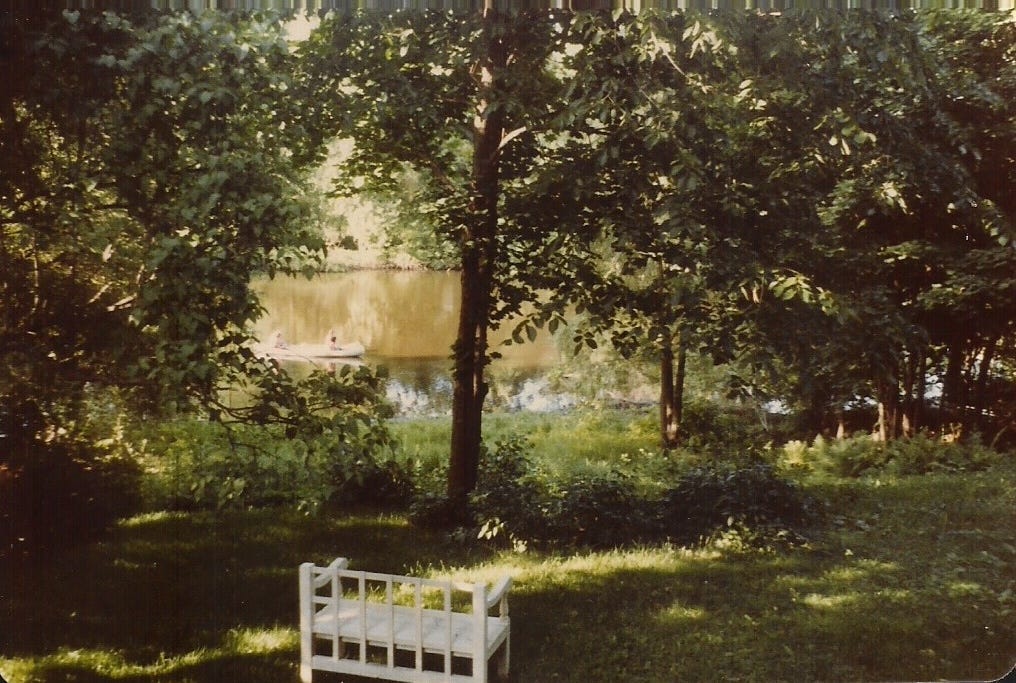
Following the Institute, I visited Elena Maulsby, who had taken part in our New Mexico psychosynthesis training, at her home in New Hampshire–falling deeper in love with New England in the process!
In July, I traveled to Pasedena to co-lead another psychosynthesis workshop with Vivian King. And in early August, Walter, Susan, and I held a final weekend training at the Bodhi Mandala center in Jemez Springs.
All this while Jim and I were preparing to move to California!
Preparing to Move
(Jim) Family circumstances that would affect our westward migration were changing rapidly as we went about preparing for this next phase. Greg had already left the nest and was cruising through his second year at UC Santa Cruz (made possible by a full-ride Regent’s Scholarship). Cassidy, however, was poised to enter his senior year at Los Alamos High School. Molly and I were eager to change our life trajectory as soon as possible, yet unwilling to drag Cass with us back to California to the detriment of his finishing high school in the company of his long-time friends. The solution to this quandary appeared in a novel way, which Molly describes below:
(Molly) We are trying to figure out with whom Cassidy can stay for his senior year in high school while we take off for California. Most of Cassidy’s friends’ parents are more authoritarian than we are, and Cassidy doesn’t want to live with them. I am at my wit’s end, which I tell my friend Fairley, just looking for sympathy. She suddenly blurts out,“I’ll take him!” and then pauses, as surprised as I am. “Do I mean that?” she asks herself out loud, and thinks for a moment before affirming,“Yes, of course!” Her older daughter Mirri is off to college in the fall, so there’s room in her house. Nell, her younger daughter, will be a freshman in high school and will likely welcome having an older brother around, especially a senior as popular as Cassidy.
Most importantly, Jim and I are confident that Fairley’s parenting style is very similar to ours.
(Both) This turned out to be a very fortuitous choice, because Cassidy and Nell had a wonderful time that year, nearly driving Fairley crazy with their frequent water fights while washing dishes and general horsing around. Neither had had a sibling of the opposite sex, and Cassidy hadn’t had a younger sibling. Instead of feeling at all abandoned, he felt launched on a grand adventure.
We are forever grateful to Fairley and Nell for welcoming Cassidy into their home and family for that school year.
Making the Move
We had to make three trips back and forth between Los Alamos and Marin County to complete our move. In late August we traveled west to find an apartment. In September we returned to New Mexico to pack up and move all our belongings to our temporary new home. On that trip, we celebrated our 25th wedding anniversary along with Jim’s parents’ 50th anniversary with a camping trip in the Jemez mountains with a good-size group of family and friends. There Donna and Tex’s son, Rusty, announced that he would become a father soon as his fiance Tracy was pregnant; their son Justin was born a few months later.
In November, we had to return again to Los Alamos to finalize the sale of our White Rock house, which had become a huge stumbling block. We needed the proceeds from that sale to enable purchase of a home in our new locale. We had hoped to avoid commissioning that job to a realtor, and felt fortunate when we met a young family who had just rented and moved into a house down the street from us. The husband, Bill, was very enthusiastic about buying our home, but refused to agree to a straightforward purchase, even after we had allowed the family to move into the house. As time went on, well after we had moved to California, he paraded a string of conditions and steps so bewildering and unacceptable to us that we finally lost patience and hired a lawyer to negotiate with him. Ultimately, we had to evict the family and hire a realtor after all, resulting in a sizable drop in our proceeds from the sale.
(Both) At our wits end trying to deal with our potential buyer, having just received another phone call from him demanding further concessions, we go up into the hills of Marin County and climb into the spreading arms of a large live oak tree. The tree seems to hold and comfort us deeply, enabling us to decide on a course of action.
We had been fortunate to find a charming apartment in Fairfax, just west of San Anselmo where our new practice with the Creative Health Center was located. The apartment was in a small complex on the western edge of Fairfax, set along the base of a redwood-covered hillside. From our deck it was not unusual to see deer grazing among the trees.
The first time we had walked up a path from the parking area in search of the manager’s apartment, we’d heard the sound of a piano being played very sweetly. The music got louder as we approached the address that had been displayed on the “for rent” sign visible from the street, and we soon found that the pianist we heard was the manager–who paused in his practice when we rang the doorbell and showed us the one available apartment, which we immediately rented.
All-in-all we were hooked from the beginning, and never regretted living at the Redwood Glade Apartments for the first year or so of our new California life.
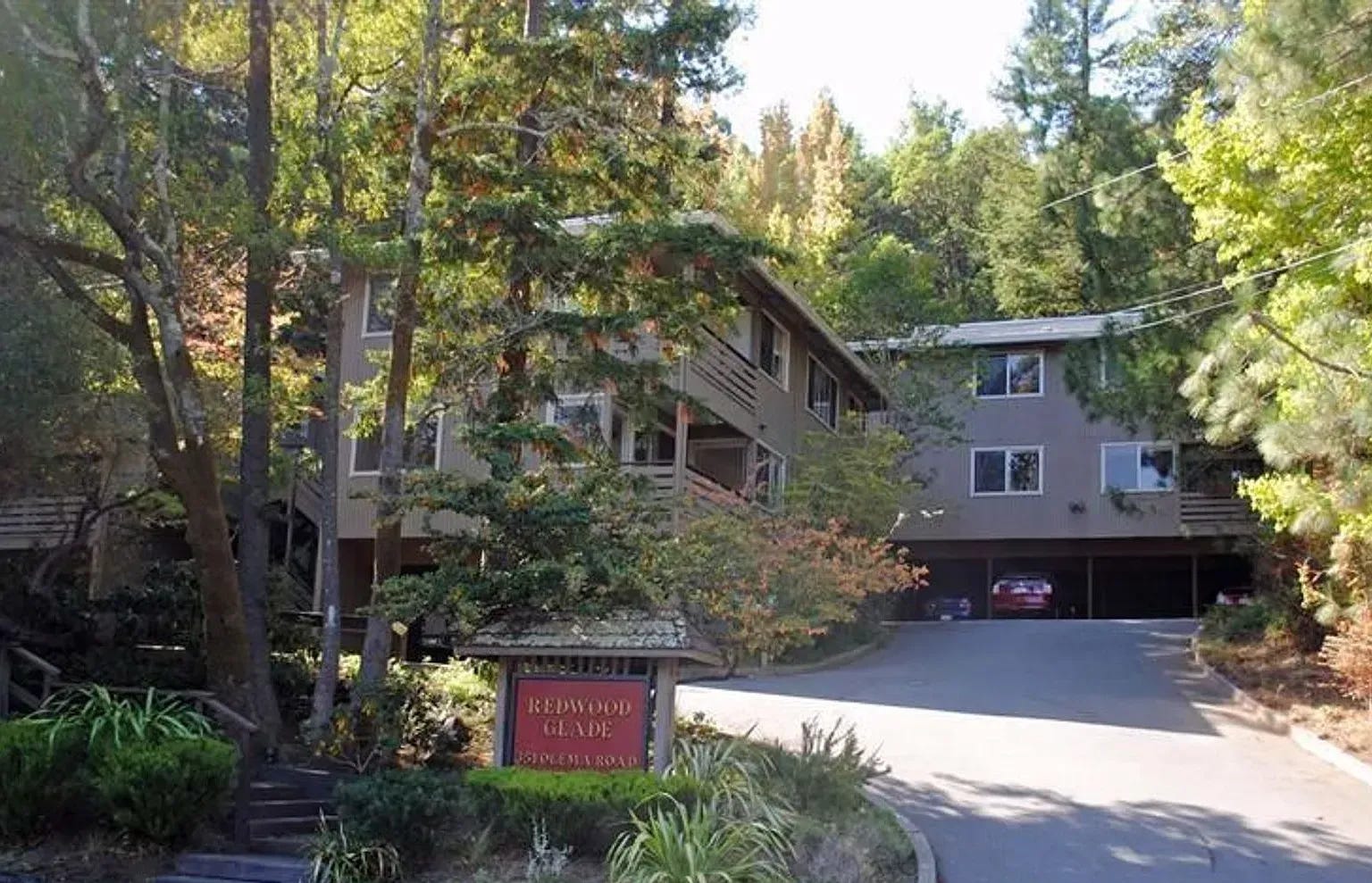
A four-minute drive eastward on Sir Francis Drake Boulevard was downtown Fairfax; five minutes more took us to San Anselmo and our new professional venue, the Creative Health Center. Heading the opposite direction from our new (interim) home was the main route through the wilds of West Marin: Sir Francis Drake Blvd, led all the way to the Pt. Reyes National Seashore on the Pacific Coast. Thus we not only had ready access to many trails through nearby redwood forests; a twenty minute drive west brought us to sandy beaches from which sea lions could often be seen swimming just offshore–apparently observing the humans who were observing them. Abundant natural beauty still existed here, whereas it was sadly being eroded in the erstwhile “Land of Enchantment” in which we and both our sons had all grown up.
(Jim) Today in Northern New Mexico the Rio Grande is sucked nearly dry,
the aquifer draining fast, the foothills of the Sangres barren with drought
and clotted with trophy homes, new four-lanes across the valley choked
with SUVs belching fumes that obscure the enchanting light that
their drivers have paid so much money to enjoy.
(excerpt from “Growing up on the Pajarito Plateau” in Language Be My Bronco)
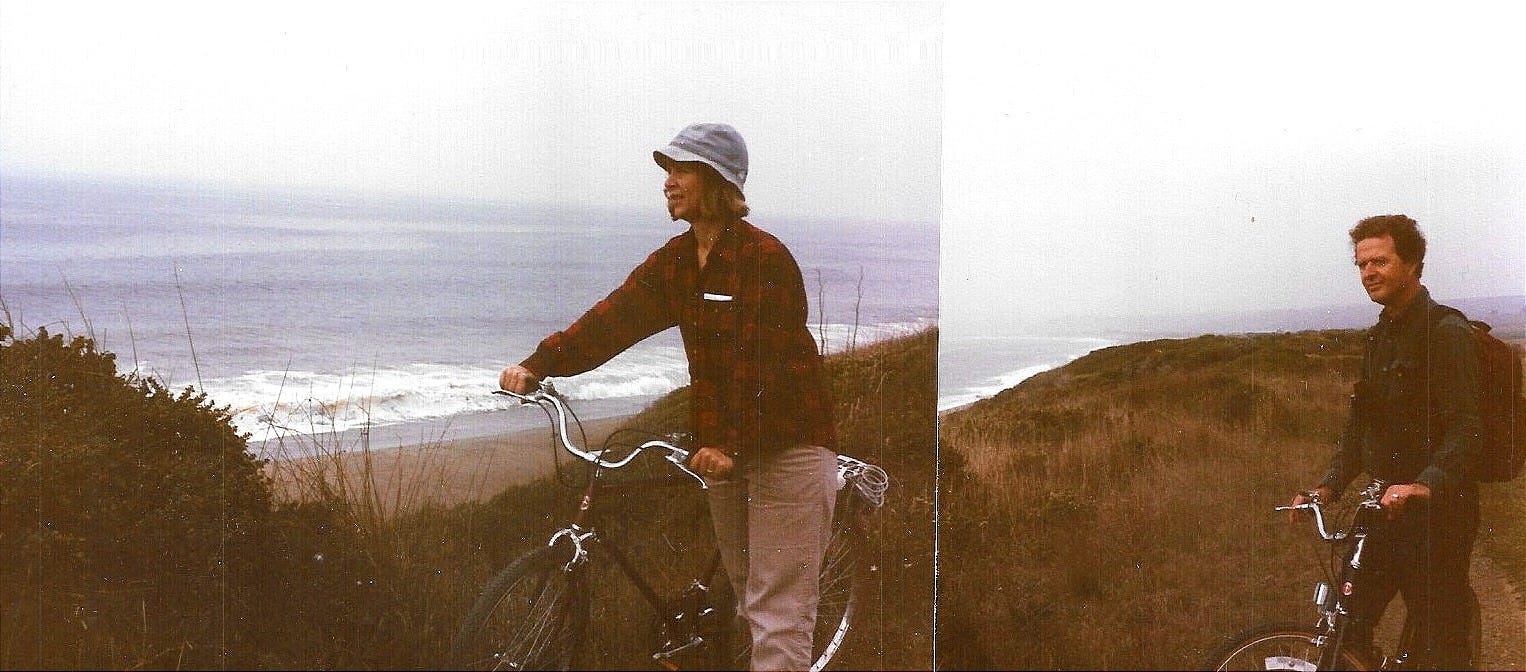
In moving to this lovely coastal setting well north of the urban congestion of the primary Bay Area, we were essentially–as our hippy forebears used to say–“following our bliss”
Meanwhile, on the national scene…
…the Iran-Contra Scandal was unfolding, as secret arms trafficking to Iran by senior officials of the Reagan administration came to light. This had been done to fund the Contras, an anti-Sandinista rebel group in Nicaragua. The whole deal became international news in November while we were still entangled in our sale of the White Rock house, but we were nevertheless quite disturbed about it. We already opposed the Reagan administration’s backing of the Contras, because the Sandinistas had won an apparently free and fair election in 1984. We were very concerned about our government interfering in Latin American politics to promote American corporate interests over the welfare of the people. And to add to that, arms sales to Iran were blatantly illegal, and funding of the Contras was prohibited by Congress under the Boland Amendment.
This political brouhaha continued to occupy the news for the next three years, demonstrating how much our government was (as it still is) controlled by corporate interests. Reagan’s ability to escape responsibility for these illegal activities (neither of the two investigations found evidence that he even knew what was going on) had many citizens like us referring to him as “Teflon Ron.” After he left the presidency in 1989, he was diagnosed with Alzheimer’s, so perhaps he was already incapacitated–as he often appeared to us during his final years in office. In the end, several dozen administration officials were indicted and eleven were convicted, only to be pardoned by the next President, George H. W. Bush, who had been Reagan’s Vice-President..
A Brief Pause for Reflection
When we began this joint memoir our intent was to trace the circumstances and events of our lives both singly and together that contributed to our development as humans. It became obvious very quickly that every circumstance and event we could recall occurred in a context that permeated our personal experience and inevitably influenced our development.
Almost reflexively, we began to emphasize the multi-faceted context as a backdrop for our experience–the sociopolitical, economic, cultural and natural worlds we inhabited. The political dramas began in earnest when President Truman authorized the destruction of Hiroshima and Nagasaki using nuclear weapons developed by people we came to know in the town where we grew up (most of whom were privately anguished by the horrific outcome of their work).
The dramas continued when JFK was elected president (great joy!), reaching a peak of tragedy with his assassination. When Lyndon Johnson succeeded Kennedy in the Whitehouse the Vietnam War was cranked up to full throttle with horrendous effects still in evidence today, magnified even further by Reagan’s two terms in office after his gang torpedoed a second term of the hope-inspiring presidency of Jimmy Carter. Under Reagan, the ever-growing U.S. military-industrial complex resumed its relentless secret mission to siphon the mineral wealth of Southwest Asia (aka the Middle East) for the benefit of Wall Street plutocrats.
This resulted in a bewildering succession of wars in Southwest Asia, backed by two Bush presidencies (which were grotesquely punctuated by the 9/11 tragedy), and unfettered by any presidency since then. The U.S. plutocracy’s preoccupation with exploiting Southwest Asia continues as of this writing, currently supplying Israel with bombs and military equipment to carry out genocide in Gaza.
And now we have D. J. Trump and his billionaire buddies baldly attempting to shred our Constitutional form of government, with its checks and balances, its imperfect yet mostly effective procedures for addressing the problems common to all humans on the planet.
The socio-political currents outlined in this section, their inevitable effect on all aspects of planetary well-being, and our responses to them, have deeply affected who we are and how we adjust to challenges of living on this planet at this time.
We’ll post the next chapter in a month or so, with tales of our new life in California.